Listen Live

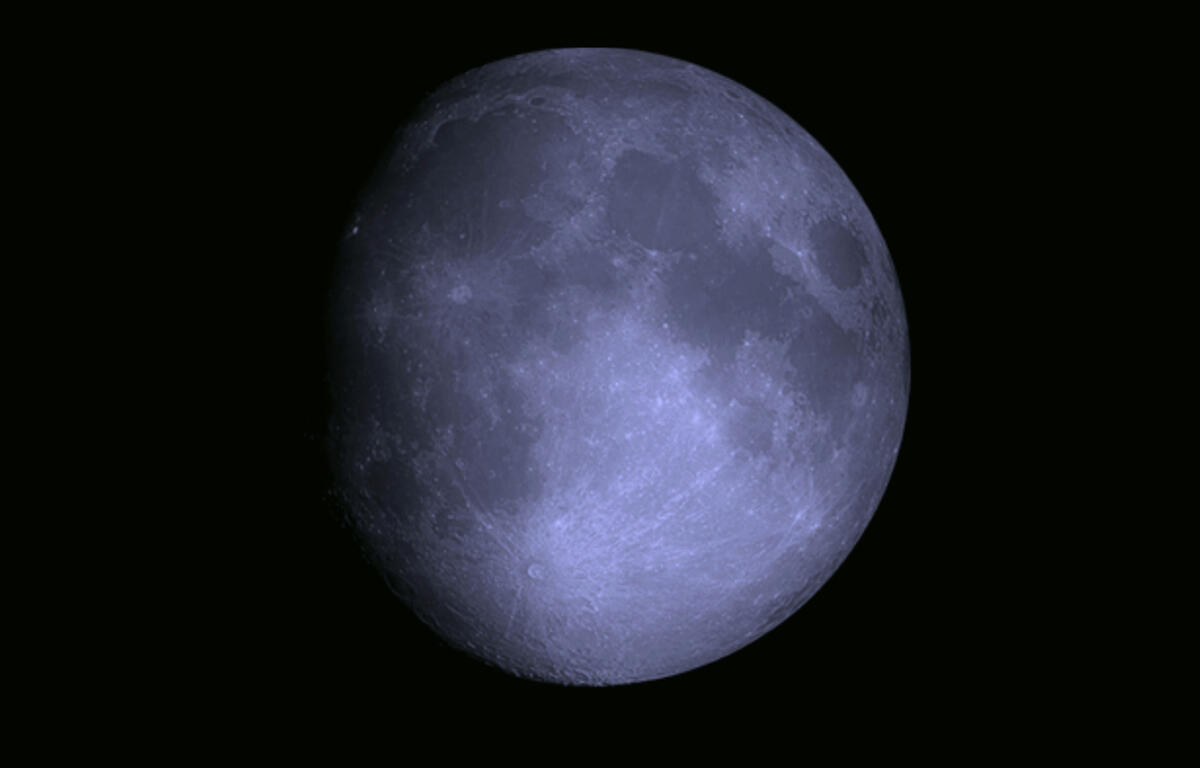
HARRISONBURG VA: (Rocktown Now) – In the early hours of this morning, at exactly 4:45 a.m., the moon reached its official full phase, the precise moment when the Earth sits directly between the sun and the moon, allowing the lunar surface to be completely illuminated. For those who were awake, it offered a brief but striking sight before the moon slipped below the horizon at 5:36 a.m. Even if that moment was missed, the experience is far from over; the moon will rise again tonight at 9:23 p.m., appearing just as full and radiant, shining bright over the Shenandoah Valley and beyond as it climbs into the night sky.
This particular full moon is often called a “Blue Moon,” a term that has captivated people for generations despite having little to do with the moon’s actual color. In modern usage, a Blue Moon most commonly refers to the second full moon occurring within a single calendar month, an event that happens only every few years due to the roughly 29.5-day lunar cycle. It can also describe the third full moon in a season that contains four full moons instead of the usual three. In both cases, the meaning centers on rarity, which is why the phrase “once in a blue moon” has become synonymous with something that happens only occasionally.
Despite the name, the moon does not typically take on a blue hue. The origins of the term are rooted more in language and evolving tradition than in appearance. Historically, the phrase was used to describe an extra or unexpected full moon that disrupted calendars, particularly those tied to agriculture or religious observances. There are rare moments when the moon can appear bluish, usually due to atmospheric conditions such as volcanic ash or widespread smoke particles scattering light, but these occurrences are uncommon and unrelated to the traditional naming of a Blue Moon.
Folklore surrounding the Blue Moon gives it a special place in cultural imagination. Because it stands outside the normal rhythm of lunar cycles, it has often been linked with heightened meaning. Some traditions view it as a time when intuition is stronger and emotions run deeper, while others see it as an opportunity for reflection and renewal. It is sometimes described as a “second chance” moon, offering a moment to revisit goals, reconsider intentions, or bring closure to things left unfinished.
Long before modern calendars, farmers relied heavily on the moon’s cycles to guide planting and harvesting. An unexpected extra full moon could cause confusion or require adjustments, adding to the sense that a Blue Moon was something unusual or even disruptive. Over time, that practical concern gave way to symbolism, and what was once an inconvenience became something more mysterious and even magical.
Although the exact moment of fullness has already passed, the moon tonight will still appear entirely full to the human eye. Our perception allows for a wide window around the peak, meaning that when it rises this evening, it will look just as luminous and complete as it did before dawn. Watching it rise and brighten the sky offers a simple but powerful connection to the natural rhythms that have guided human life for centuries.
Seeing the Blue Moon tonight is more than just a visual experience; it is a reminder of how science and storytelling intertwine. It reflects both the precision of celestial motion and the enduring human desire to find meaning in the sky above. Moments like this, rare yet familiar, invite us to pause, look up, and appreciate the quiet wonder of something that doesn’t come around very often.
The Full Blue Moon will be shining bright
This particular full moon is often called a “Blue Moon,” a term that has captivated people for generations despite having little to do with the moon’s actual color.