


 Listen Live
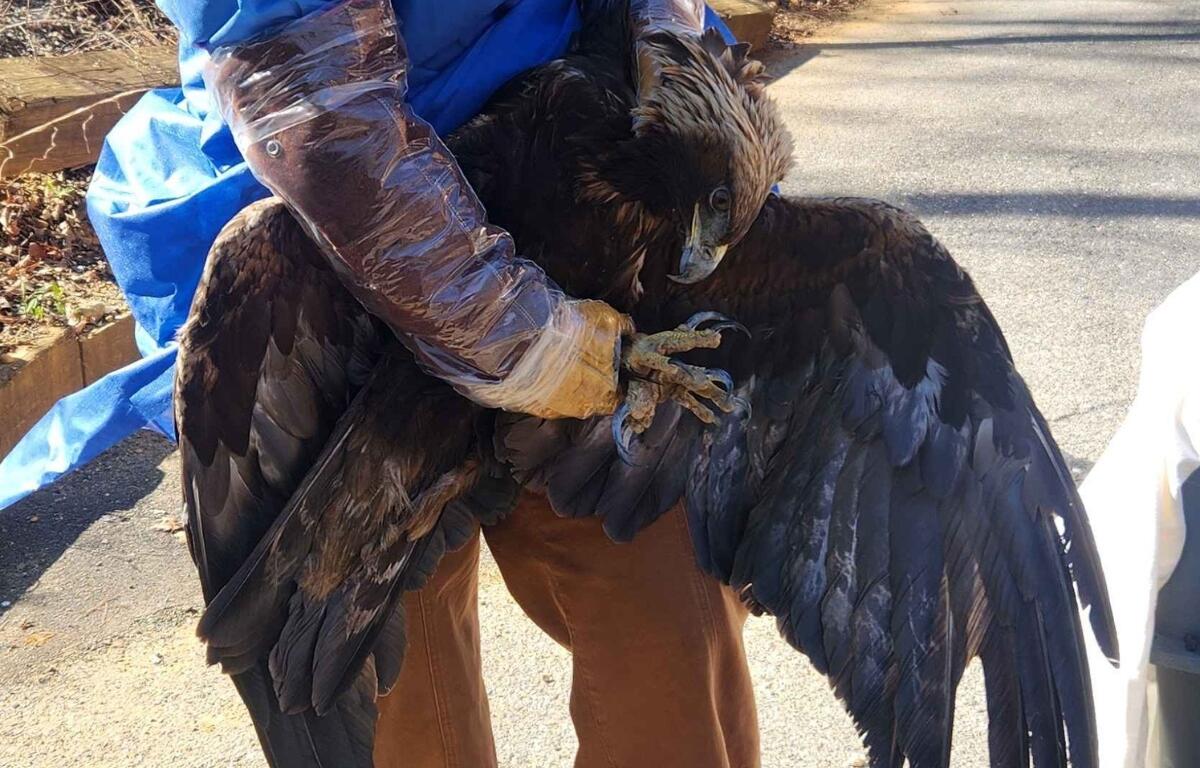

WAYNESBORO, VA (Rocktown Now) — On April 8, the Wildlife Center admitted an adult Golden Eagle that was found grounded in a marsh in Isle of Wight County. The eagle was initially taken to Nature’s Nanny Wildlife Rehabilitation and then transferred to the Center for emergency care. While this species migrates through Virginia during the fall and winter, it’s far less common to see one at this time of year.
On admission to the Center, the eagle was quiet and severely neurologically compromised, exhibiting a pronounced left-sided head tilt, struggling to remain upright, and unable to coordinate normal movement. The veterinary team examined the bird and found that he was thin and moderately dehydrated, with involuntary twitching noted in the left eye and leg. Bloodwork identified the likely cause: lead toxicosis. The eagle tested positive for 0.327 ppm lead—a very high level that can cause permanent neurologic damage.
Lead poisoning is a serious and well-documented threat to raptors; while the exact source can vary, the most common cause of lead poisoning occurs when birds ingest fragments of ammunition from carrion. Golden Eagles primarily consume small to medium-sized mammals, but are also opportunists and will scavenge, particularly during winter. Staff suspect that this eagle incidentally ingested lead fragments while feeding on a carcass, leading to its condition and explaining why the bird had not yet migrated north.
The veterinary team immediately started chelation therapy to remove the lead from the bird’s system, but sadly, the eagle’s condition significantly declined, and the bird was found in respiratory distress on the morning of April 13. Veterinary staff made the difficult but compassionate decision to humanely euthanize the eagle.
This eagle’s case is a stark reminder of the ongoing danger lead poses to wildlife. The impact goes far beyond just eagles; more than 40 species of birds and mammals have tested positive for lead at the Center. Choosing non-lead ammunition is a simple step that can save lives by reducing exposure for scavengers. Learn more on their Lead Poisoning page and help spread the word.