


 Listen Live
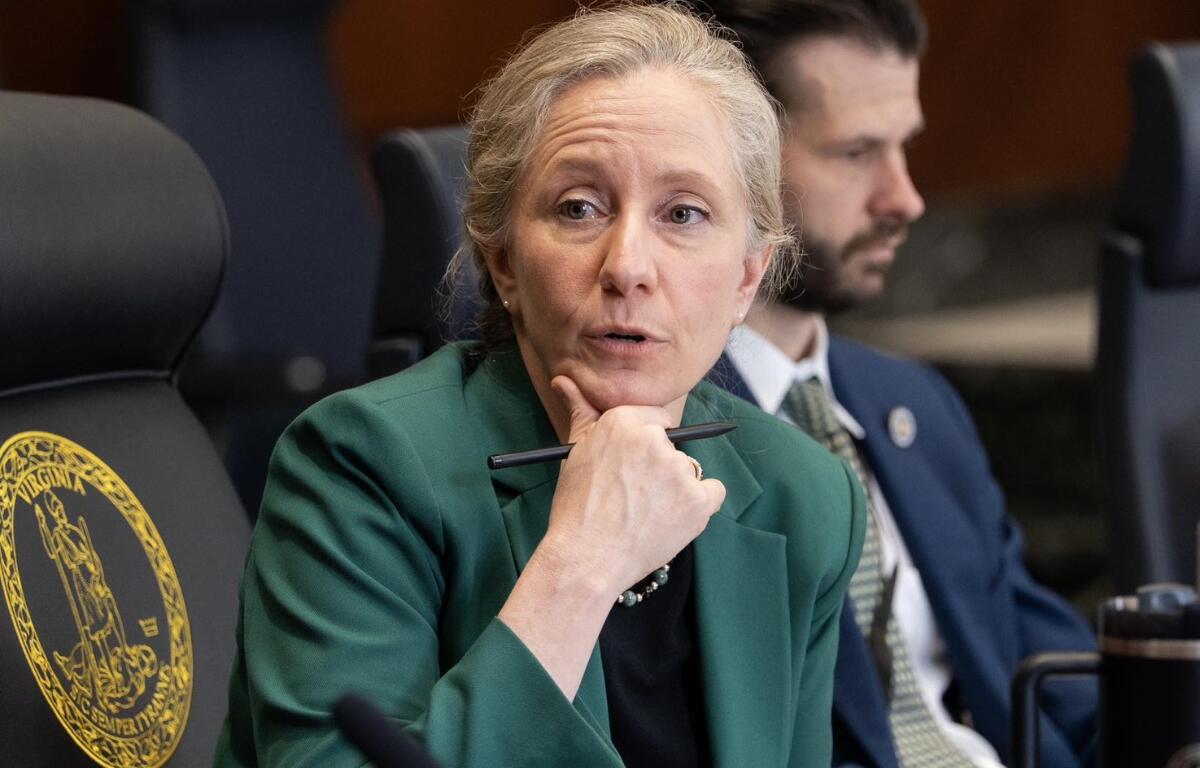

RICMOND, VA (Rocktown Now) — Governor Abigail Spanberger announced a series of amendments to gun safety, marijuana, and vape enforcement legislation, saying the changes are designed to strengthen public safety while providing clearer guidance for Virginians and law enforcement.
In a statement, Spanberger said she supports responsible gun ownership and the Second Amendment, but argued that rising gun violence requires action.
“I grew up in a family where responsible gun ownership was expected, and I carried a firearm every day as a former federal agent,” Spanberger said. “But gun violence is the leading cause of death for children and teenagers in America, and that should motivate all of us to ask ourselves what we can do to mitigate this harm.”
Among the measures amended by the governor were House Bill 217 and Senate Bill 749, which would prohibit future sales of assault-style firearms and magazines capable of holding more than 15 rounds. Firearms purchased or owned before July 1, 2026, would be exempt. The amendments also clarify which firearms are covered and preserve the use of certain semi-automatic shotguns used for hunting.
Spanberger also amended House Bill 1525, which raises the minimum age to purchase a handgun or assault firearm from 18 to 21 and restores universal background checks for private sales. The changes direct Virginia State Police to resume checks on private firearm sales and include an emergency clause allowing the law to take effect immediately after General Assembly action.
Additional amendments were made to House Bill 871 and Senate Bill 348, which require safe storage of firearms in homes where minors are present. Under the governor’s proposal, firearms secured with a purpose-built gun lock and rendered inoperable would meet safe storage requirements.
House Bill 702, which allows local governments to create gun sell-back programs, was also revised to clarify that the programs are intended to provide residents with a safe option to voluntarily surrender firearms.
The governor also announced changes to legislation creating Virginia’s legal marijuana retail market.
“Five years ago, the Commonwealth took the first steps to legalize marijuana — and for five years, the work sat unfinished,” Spanberger said. “We are working to set up a marketplace that is controlled, regulated, and responsible — because legal markets only succeed when there are clear guardrails and enforcement to back it up.”
House Bill 642 and Senate Bill 542 establish the framework for a regulated retail marijuana market. Spanberger’s amendments strengthen enforcement and consumer safety provisions, while delaying the start of retail sales until July 1, 2027, to allow more time for implementation and to combat the illicit market.
The governor also amended House Bill 26 and Senate Bill 62, which create a process to reconsider sentences for some marijuana-related convictions issued before legalization. The changes specify that violent offenses and crimes involving firearms or dangerous drugs such as fentanyl and heroin would not be eligible for reconsideration.
Finally, Spanberger backed stronger enforcement of House Bill 308 and Senate Bill 620, legislation aimed at shutting down vape shops that repeatedly sell to people under 21. The bills require unannounced compliance checks by the Virginia Alcoholic Beverage Control Authority at least once every two years, while the governor’s amendments expand law enforcement’s ability to target illegal vape sales.