


 Listen Live

Your Lighting Might Be Why Your Home Feels Off During Seasons Changing
Small lighting changes that can make a big difference in how your home looks and feels.
As the sun begins setting earlier over the Shenandoah Valley, something interesting happens inside our homes.
The living room that felt bright and inviting all summer suddenly seems a little dull. The kitchen lights feel harsh after dinner. And that favorite reading corner? Not quite as cozy as you remember.
Before you start shopping for new furniture or picking out paint colors, consider something simpler: your lighting.
Light influences more than how we see a room. It affects the atmosphere, how we use our spaces, and even our daily routines.
Here are a few ways to make your home feel more comfortable as fall turns to winter, with some thoughtful design considerations from Rendered Homes LLC.
1. Create Atmosphere Without a Renovation
One of the easiest ways to transform a room is to stop relying entirely on overhead lighting.
Interior designers often use layered lighting, combining ceiling lights, table lamps, and accent lighting to create warmth and depth.
A floor lamp beside your favorite chair or a small lamp on a bookshelf can completely change how a room feels after dark.
Even changing your light bulbs can make a difference.
Bulbs are measured by color temperature, expressed in Kelvins (K):
- 2700K: Warm, cozy light ideal for relaxing spaces.
- 3000K: Soft white light that balances warmth and visibility.
- 4000K: Brighter, neutral light suited for tasks and workspaces.
Smart bulbs offer even more flexibility, allowing you to adjust brightness and, with compatible models, color temperature throughout the day.
Pro Tip: Turn off your overhead lights tonight and try illuminating the room with two or three lamps instead. You might be surprised by the difference.
2. Let Your Lighting Work with Your Body
Shorter days don’t just change our surroundings. They can also influence our mood, energy, and sleep.
Our bodies rely on light and darkness to regulate our circadian rhythm, the internal clock that helps determine when we feel alert and when we’re ready to rest.
Bright light during the day supports wakefulness, while dimmer, warmer lighting in the evening can help prepare us for sleep.
A few simple adjustments can make your home more comfortable:
- Welcome natural sunlight during the day.
- Keep workspaces bright when concentration matters.
- Switch to softer lighting as bedtime approaches.
Pro Tip: Try dimming your lights an hour or two before bed. It’s a small change that can make your evening routine feel noticeably calmer.
3. Know When It’s Time to Think Bigger
Sometimes, a new lamp or light bulb is all a room needs. Other times, the lighting itself needs a fresh approach.
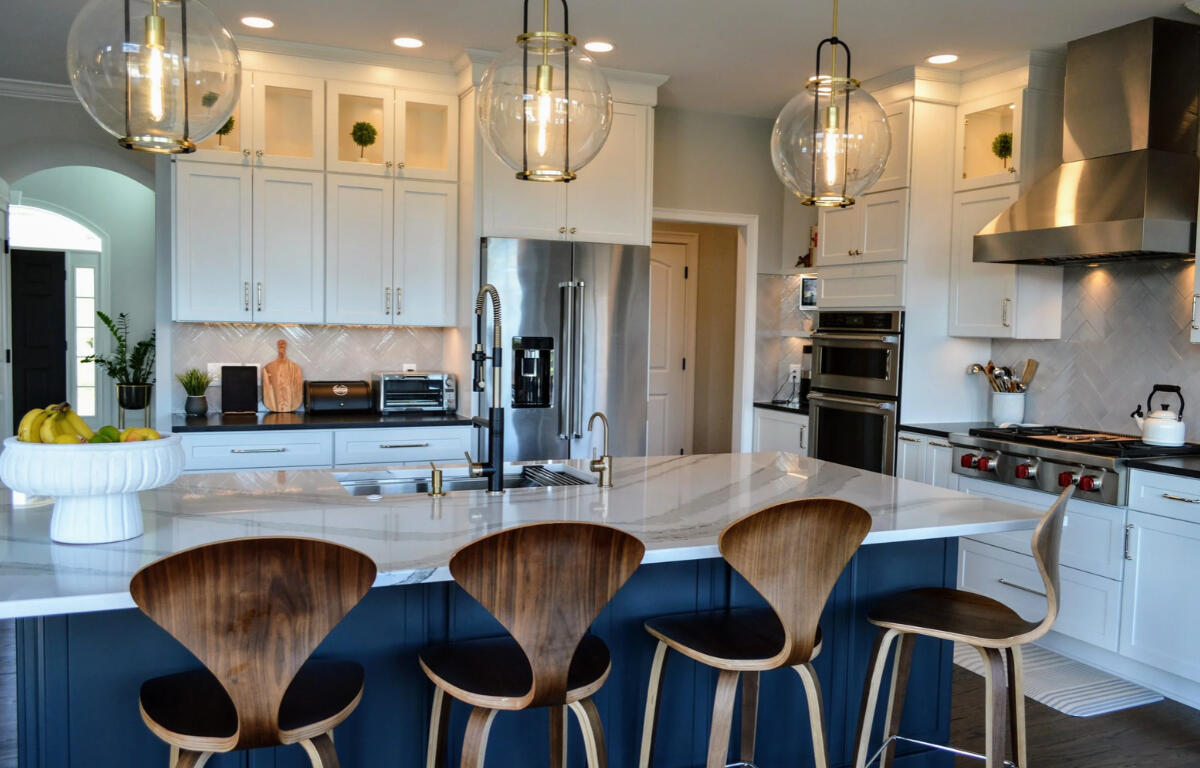
Adding pendant lights over a kitchen island, installing recessed lighting, or incorporating wall sconces can dramatically change how a space looks and functions.
These projects often require a qualified electrician, but the design decisions should come first.
Consider how you’ll use the room, where light is needed, and how each fixture complements the surrounding space.
Common Mistake: Choosing a beautiful fixture without considering its size, placement, or the light it actually provides.
Pro Tip: Before investing in permanent lighting changes, evaluate the entire room rather than focusing on a single fixture.
One Last Thought
As the Shenandoah Valley settles into the colder months, we naturally spend more time enjoying the comforts of home.
Quiet mornings with coffee. Family dinners after sunset. Evenings spent curled up with a good book.
Thoughtful lighting can make those everyday moments feel a little more special.
And the best part? You don’t have to change everything to make a difference.
Rendered Homes LLC encourages homeowners to think beyond how a room looks and consider how it feels to live in.
Sometimes, the smallest design changes can shed an entirely new light on the place you call home.
Contact Gabby Koontz today at the link here.