


 Listen Live
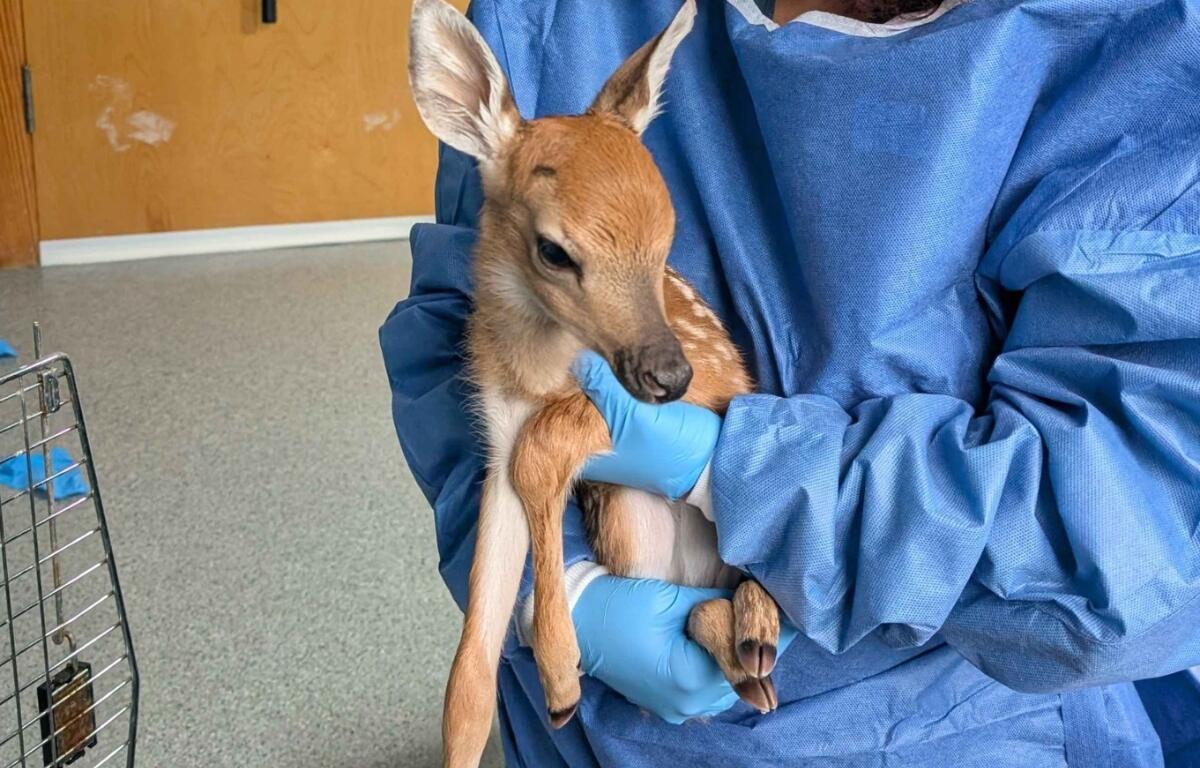

WAYNESBORO, VA (Wildlife Center of Virginia) — On May 11, a White-tailed Deer fawn was admitted to the Wildlife Center of Virginia after being found orphaned in downtown Staunton. The young fawn had reportedly been following a person for a period of time before eventually wandering into a local downtown business. With no known location for a potential reunion with her mother, the young fawn was contained by Staunton Animal Control and transported to the Wildlife Center for care. This is the Center’s second fawn admission of the 2026 season.
When the infant female arrived at the Center, she was quiet but alert, with signs that she was only a few days old. Although she readily accepted a bottle from staff and showed no obvious injuries, bloodwork revealed that her blood sugar had dropped to a dangerously low level after going without nourishment for too long. The veterinary and rehabilitation teams immediately began supportive care, providing fluids, medications, and carefully scheduled bottle feedings every four hours to stabilize the young fawn.
Over the next several days, the fawn responded well to treatment. Staff monitored her closely while working to minimize the stress of captivity, which is especially important for White-tailed Deer. Even routine handling can be difficult for fawns, which are highly sensitive to stress and prone to serious complications while in care. By May 14, the fawn had already gained weight, was eating eagerly, and remained bright and responsive during examinations. While this patient did require intervention, most fawns found alone are not orphaned and do not need to be rescued. White-tailed Deer commonly leave their fawns hidden for long periods while they feed nearby, returning periodically to nurse them. This natural behavior helps avoid drawing predators to the fawn’s location, but it also leads many well-meaning people to mistakenly assume a fawn has been abandoned.
Signs that a fawn may truly need help include lethargy, persistent crying, visible injuries, flies gathering around the animal, diarrhea, or the confirmed death of the mother nearby. In situations where a fawn’s condition is uncertain, the Wildlife Center encourages the public to contact a permitted wildlife rehabilitator before intervening. For more information on what to do if you find a baby deer, please visit this page of Wildlife Center’s website.
As fawn season continues across Virginia, the rehabilitation team will continue providing specialized care for this young patient — and the many other fawns expected to arrive in the coming weeks — with the goal of release in the fall.