


 Listen Live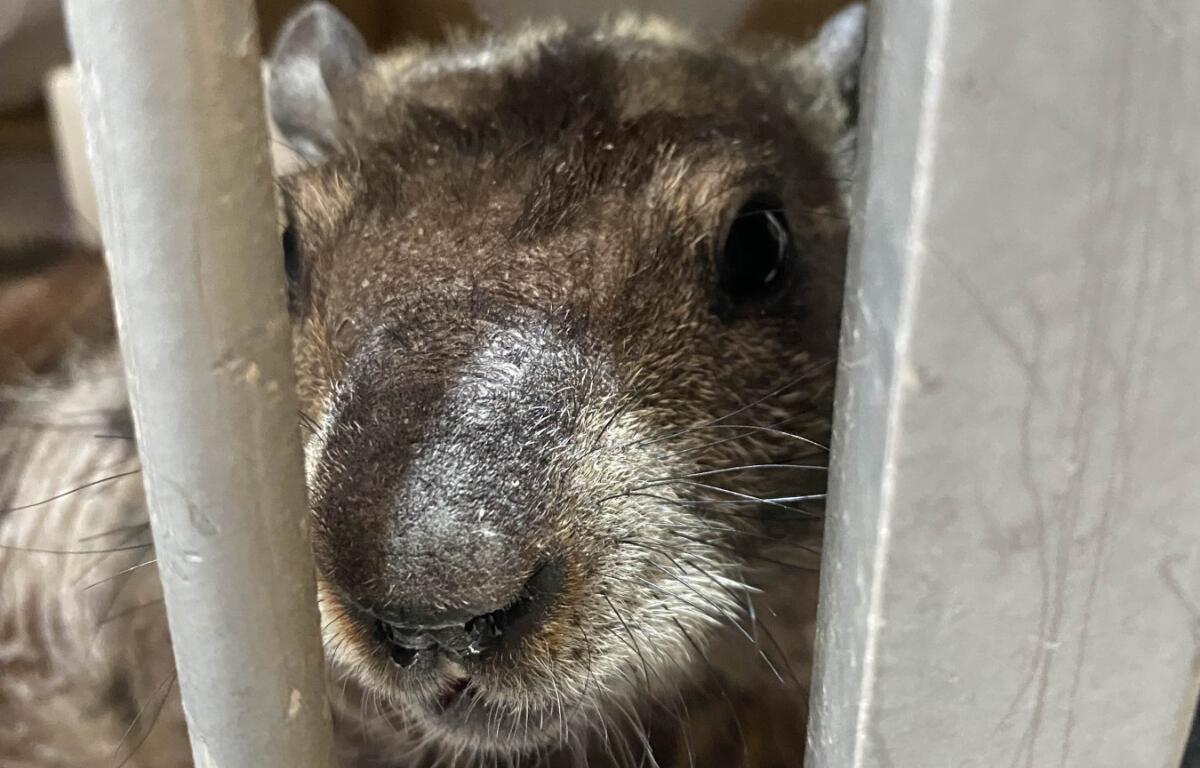

AUGUSTA COUNTY, VA (Wildlife Center of Virginia) — On December 13, the Center admitted a Woodchuck from Staunton, Virginia, after being found with severe hair loss. The animal had been caught in a live trap by the property owner for relocation, but when the owner noticed that the Woodchuck was missing most of his fur, they brought him to the Center for evaluation.
Upon admission, the Woodchuck was alert, active, and feisty. During the veterinary exam, staff noted that his abdomen was distended and that approximately 90 percent of his hair was missing. To investigate the cause of the hair loss, the team performed a skin scrape test.
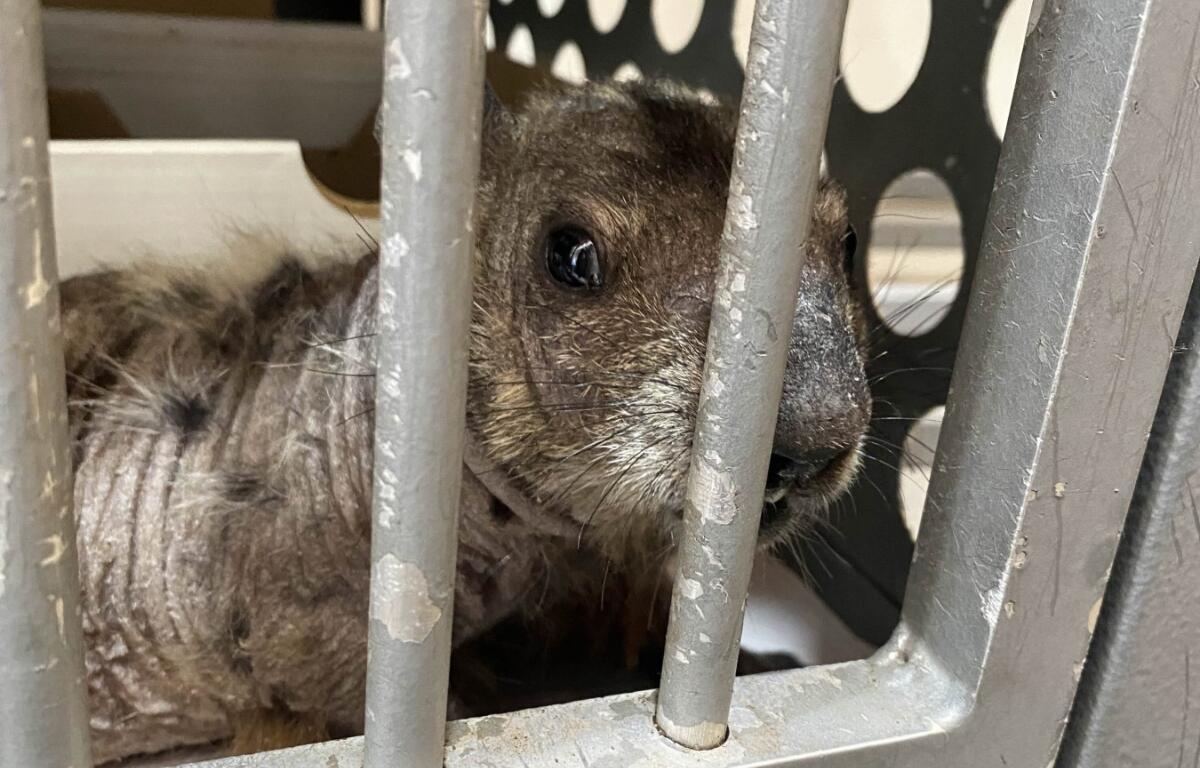
“We do see alopecia (hair loss) in groundhogs occasionally, most often caused by infectious diseases like mange or ringworm,” said Lilly Farmer, a Veterinary Technician Intern at the Center. “But in this case diagnostics did not reveal any infection, and his bloodwork looked normal, so we’re not entirely sure what caused the hair loss. We suspect it may be due to poor nutrition.”
During the past month, Center staff have offered the Woodchuck a varied, nutritious diet, including a mix of root vegetables, greens, and rodent chow. The team reports that the Woodchuck has been steadily improving, his fur has begun to grow back slowly.
“We’re starting to see the very beginning of his undercoat coming in,” Farmer said. “We plan to continue providing supportive care and closely monitor him over the winter until he is ready for release.”
Although Woodchucks are common visitors in Virginia backyards, they are often viewed as nuisance animals, leading some people to attempt to trap and relocate them—as in this case. However, relocation can be harmful to the animals and rarely solves the underlying problem and is illegal under Virginia law.
“People often see relocation as a kind or humane solution, but the reality is that it can be very detrimental to a Woodchuck’s health,” Farmer explained. “Many animals do not survive after being moved to an unfamiliar area.”
Relocation is also ineffective in the long term. When one animal is removed, another will often move in to take its place, continuing the cycle. The Center encourages property owners to explore humane, non-lethal methods of deterrence and to contact wildlife rehabilitators for guidance when concerns arise.
If you find an animal in need of help or have questions about how to handle human-wildlife conflicts, call the Center’s front desk staff at 540-942-9453.
What’s in a name? Woodchuck, groundhog, and whistlepig are all different names for the same rodent, Marmota monax. The term “Woodchuck” likely comes from an Algonquin word for “digger.” “Whistlepig” describes the sound they make to alert others to danger.