


 Listen Live
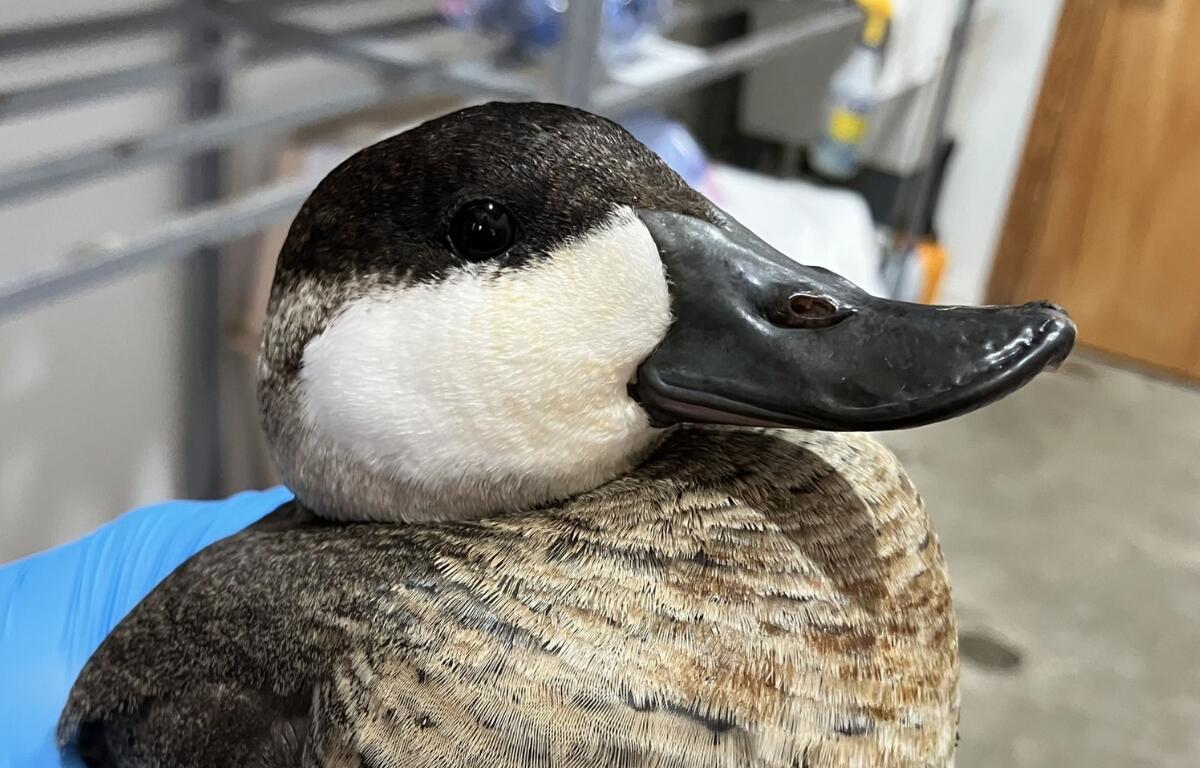

KING GEORGE COUNTY, VA (Wildlife Center of Virginia) — Each winter, the Wildlife Center enters what staff affectionately call “weird duck season”—a time when migratory duck species rarely seen in Virginia begin to arrive as patients after encountering trouble during their journey south. One of the season’s arrivals was Ruddy Duck #25-4197, admitted on December 7 after he was found grounded and injured in King George County.
Ruddy Ducks are robust birds, recognizable by their chestnut plumage and dark-capped heads. They spend the winter along Virginia’s freshwater marshes and coastal waterways. Over the seasons, their diet shifts from protein-rich insects in the summer to mainly vegetation during the colder months. Like many diving ducks, they rely heavily on water access for feeding and maintaining the health of their feet and keel, which makes prolonged time in rehabilitation settings challenging for the species.
Upon admission, the Ruddy Duck was bright and alert. The veterinary team examined the bird and found several abrasions along the front of his beak. Radiographs also revealed a fractured clavicle. The team suspects that the duck crash-landed after mistaking a hard surface for water, then became stranded; because these birds spend nearly their entire lives on the water, they are unable to take flight from land once grounded.
Veterinary staff immediately cleaned the duck’s abrasions and began administering anti-inflammatory medication. They placed the duck in the Center’s indoor holding area to rest, where staff could closely monitor him. “He hadn’t been eating on his own at all during the first days in care, but he’s started eating super worms now, so that’s a promising sign,” said Dr. Liv, a Veterinary Intern at the Center. “Our daily checks have shown that the beak abrasions and fracture are both starting to heal.”
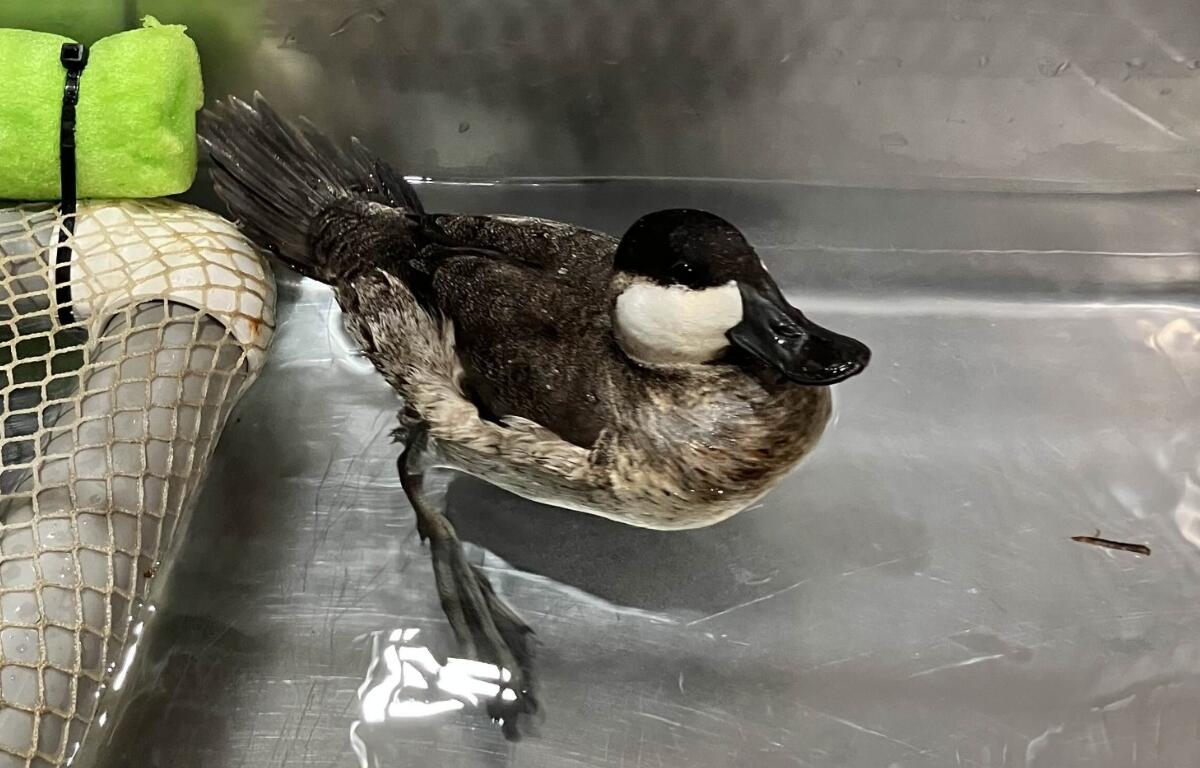
Although the fracture is beginning to heal, the duck’s prognosis remains guarded, as Ruddy Ducks are difficult to care for in captivity, and the fracture will need to heal properly for the bird to regain flight. To give him the best chance at recovery, the rehabilitation team designed a specialized enclosure that replicates his natural environment as closely as possible.
“We moved the duck to one of the Center’s aviary enclosures, where we set up a large pool so he can spend his time in the water just as he would in the wild,” said Alex, the Center’s Rehabilitation Supervisor. “We’re also in the process of acquiring an even larger pool to give him more space to dive, forage, and build his strength.”
The Center’s team remains optimistic as they work to give this small diver the best possible chance at recovery. For now, he continues to receive supportive care, routine monitoring, and daily swim sessions as he navigates the challenges of healing during “weird duck season.”