


 Listen Live
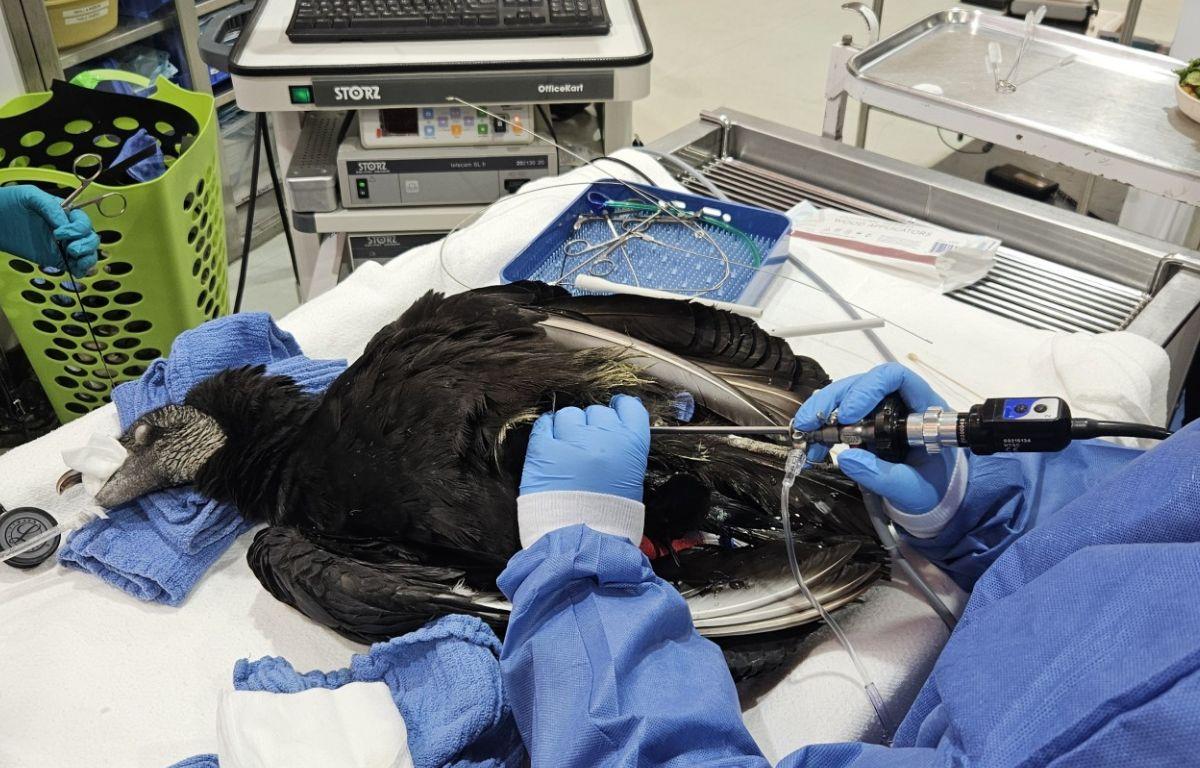

WAYNESBORO, VA (Wildlife Center of Virginia) — On January 20, the Wildlife Center admitted an adult Black Vulture that had been found grounded near a road in New Kent County. The bird was initially taken to Eastern Virginia Wildlife Rescue on January 19, and transferred to the Center the following day.
Upon arrival, the vulture appeared quiet and dull but remained responsive during handling. The veterinary team anesthetized the bird for a full examination, which revealed that he was thin, anemic, and dehydrated, with no obvious fractures or external injuries. Blood tests, however, identified the underlying cause of his condition: lead poisoning. His blood lead level measured 4.140 ppm—an extremely high concentration—and diagnostic imaging confirmed the presence of lead fragments in his digestive tract.
While the vulture was under anesthesia, Dr. Karra, the Center’s Director of Veterinary Services, used an endoscope in an attempt to locate and remove the lead fragments. Unfortunately, the fragments had progressed too far through the digestive system to be safely retrieved.
“Once the lead has passed that far through the digestive system, our options for removal are much more limited,” said Jess, the Center’s Hospital Manager. With no safe option to reach the fragments, staff will instead allow the material to pass naturally while beginning the vulture on chelation therapy, which helps remove lead from the body.
The veterinary team is currently providing fluids and ongoing chelation therapy. At this stage, the vulture’s prognosis remains guarded. While there is potential for improvement if the lead is successfully eliminated, lead poisoning can cause permanent neurologic damage, especially in cases involving such high lead levels.
Unfortunately, cases like this are not uncommon at the Wildlife Center. Each year, about 50 to 60 vultures are admitted, and lead poisoning is consistently one of the leading causes of admission. Lead poisoning usually occurs when vultures scavenge the carcasses or remains of animals left in the field by hunters. When game animals are shot with lead ammunition, the bullets can fragment on impact, leaving behind small pieces of lead that scavengers may ingest.
One of the most effective ways to protect vultures and other scavenging wildlife is to choose non-lead ammunition when hunting. Properly disposing of carcasses and gut piles can also reduce the risk of lead exposure. By making small changes in the field, hunters and landowners can play a critical role in preventing lead poisoning and keeping these essential birds healthy.
For more information about lead poisoning in raptors and other animals, visit: Lead Poisoning in Raptors and Other Animals | Wildlife Center of Virginia