


 Listen Live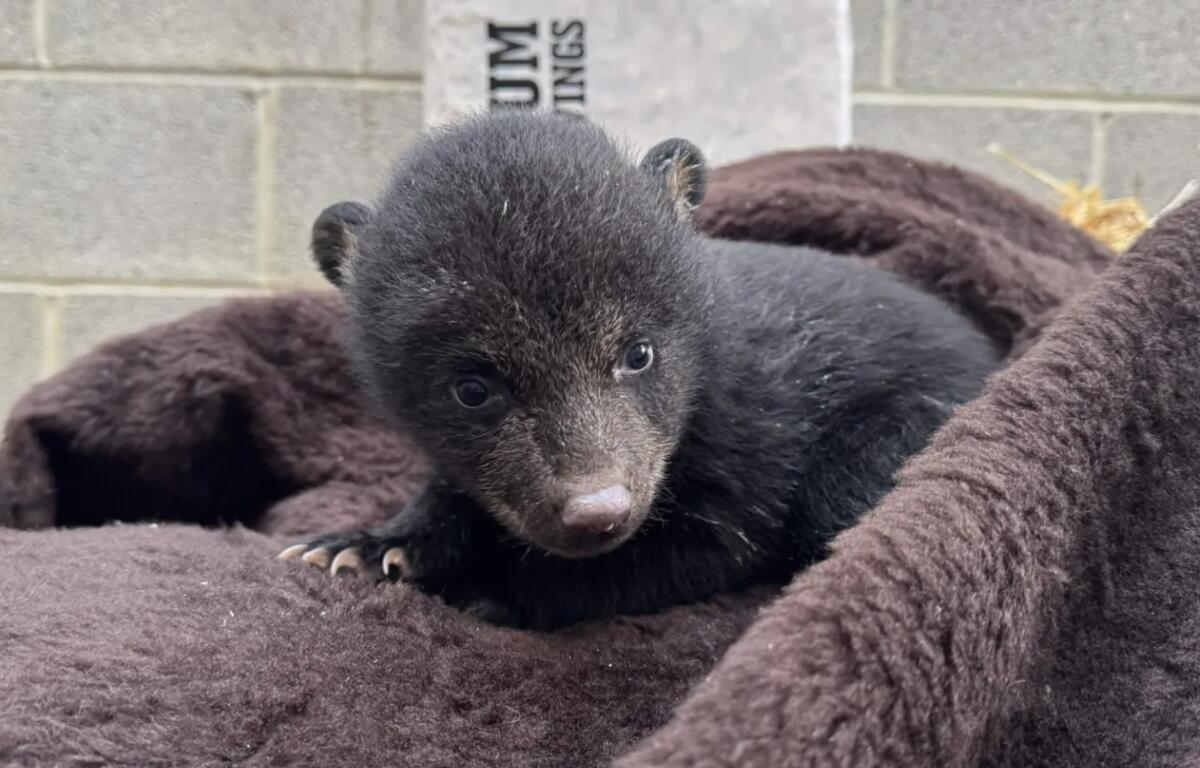

WAYNESBORO, VA (Rocktown Now) — On March 9, the Center admitted the first Black Bear cub of 2026—a young female that was found alone, muddy, and shivering at a residence in Bedford County. The finder watched the cub for six hours but did not see any signs of the mother. Department of Wildlife Resources staff responded, determined that the cub was likely orphaned, and transported her to the Center for care.
On admission, the cub—estimated to be about six weeks old —was quiet, but alert and responsive. After giving her a brief period of rest, the veterinary team anesthetized the cub to perform a full exam and diagnostic workup.
Veterinary staff found that the cub was mildly dehydrated but otherwise in good body condition, with no apparent injuries. Radiographs were within normal limits, and bloodwork was largely normal, though it did reveal low blood glucose—indicating she had not eaten for some time.
After the exam, the veterinary team administered fluids and placed the cub in a large Zinger in the Center’s ICU to recover. Later that evening, the rehabilitation team syringe-fed her electrolytes. While the first feeding is often a challenge, the cub eagerly took to the syringe and drank about 75% of the solution.
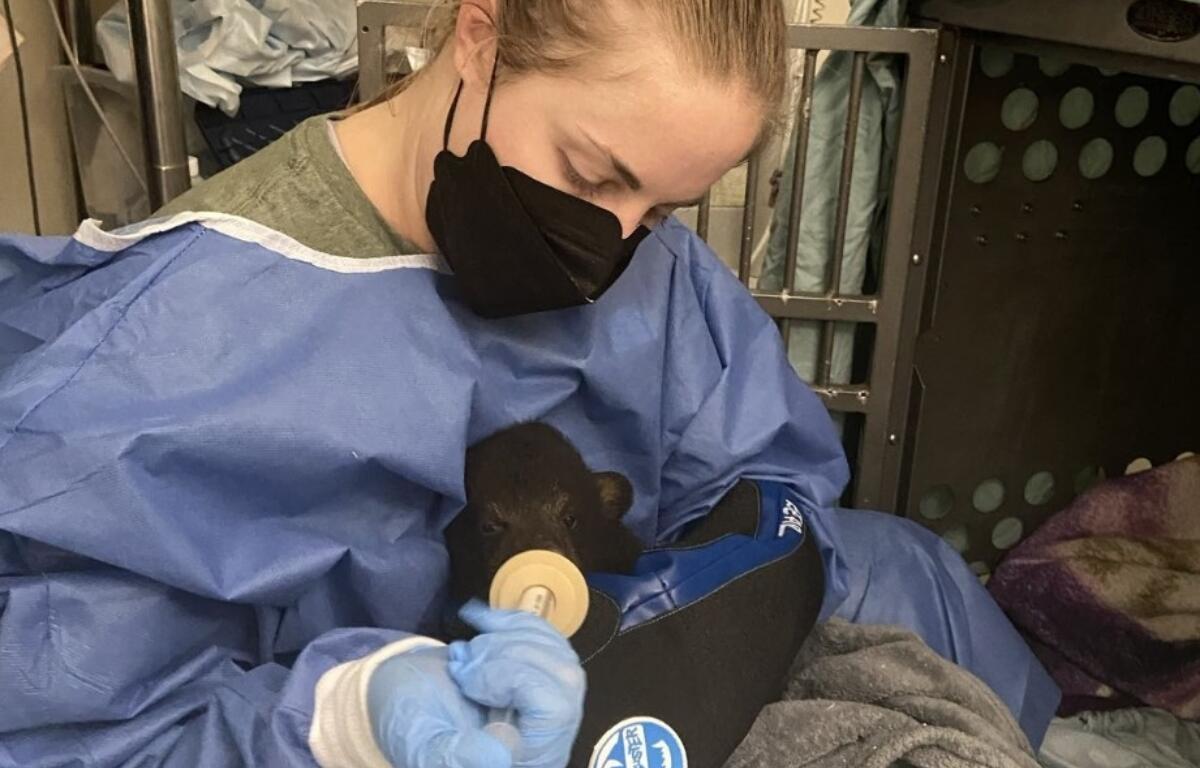
Given the cub’s age, the rehabilitation team decided to leave a “mush bowl” of soft food overnight to see if she would eat on her own. The next morning, rehabilitation supervisor Alex Olvera reported that “the bowl was licked clean! The cub’s face was covered in dried bits of food, which we helped clean off.”
In addition to feeding, the team provided a thick, soft blanket that mimics the feel of nestling up with the mother’s fur. They have also begun providing short periods of “play time”, as cubs at this age require socialization for healthy development. The team captured a short video of the cub’s interactions with staff after her meal.
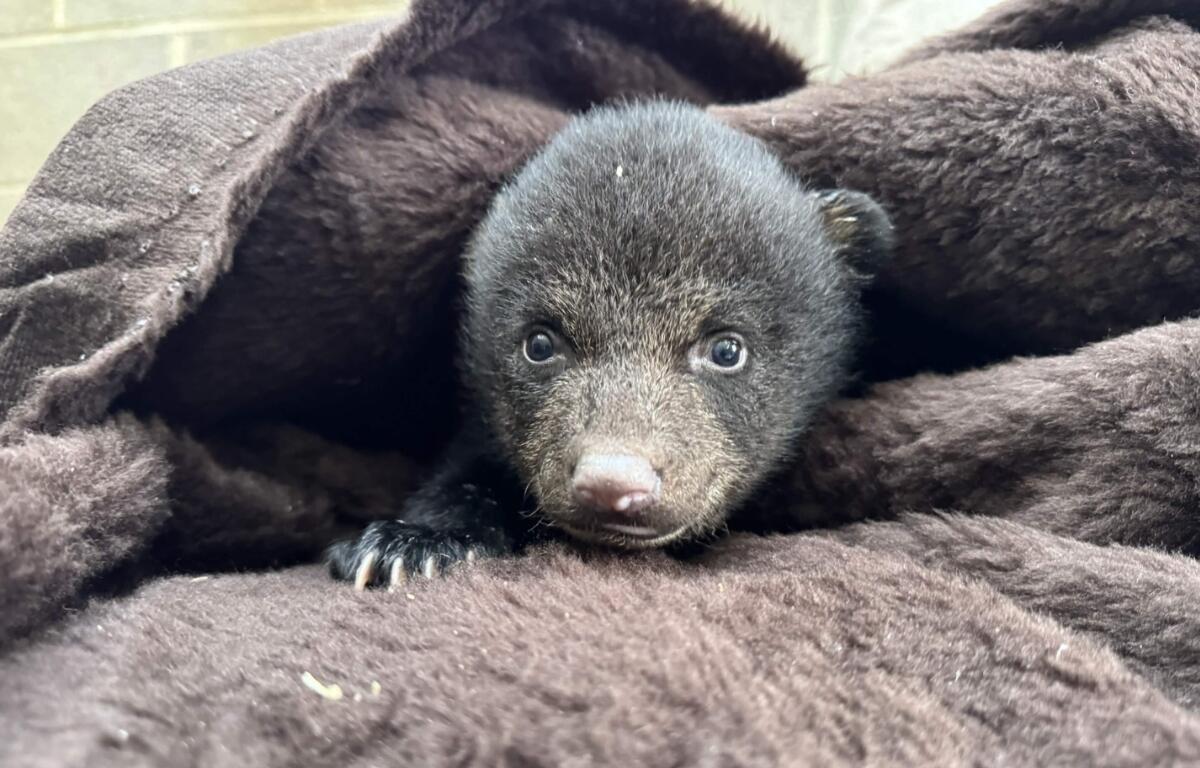
The rehabilitation team will continue to provide supportive care and closely monitor the cub. For now, she is staying in a Zinger in one of the Center’s Bear Pens, where she is receiving three formula feedings each day, along with two mush bowls.
With mother bears and cubs on the move, there’s an increased chance you might come across a cub during this time of year. If you find a cub you are concerned about, contact DWR’s Wildlife Conflict Helpline (or your state’s wildlife agency) before intervening. If you must pick up a cub, never handle them bare-handed; always wear gloves to ensure you have no direct contact with the bear. For more information on living side-by-side with bears, visit DWR’s Be Bear Wise page.