


 Listen Live
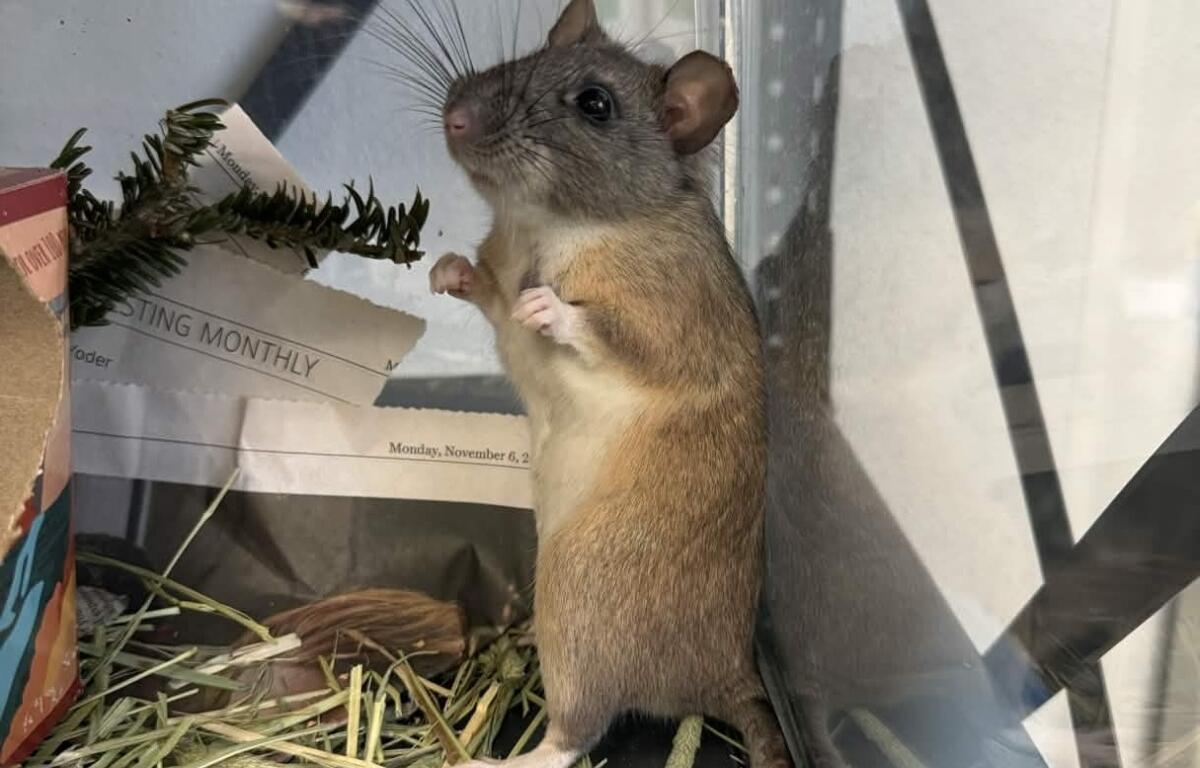

WAYNESBORO, VA (Rocktown Now) — On March 6, the Wildlife Center admitted an Allegheny Woodrat found living in a crawl space in Albemarle County. Unlike most patients that arrive due to injury, this woodrat came to the Center for a very different reason—to take part in a conservation breeding program.
Allegheny Woodrats—also nicknamed “pack rats” for their habit of collecting and caching non-food items—are medium-sized rodents with large ears, grayish-brown fur, and a white underside. These rats typically inhabit rocky outcrops, cliffs, and similar habitats. Once common across much of the Midwest and East Coast, their population has declined significantly over the past century.
Today, conservation organizations are working to restore woodrat populations through collaborative breeding and release efforts. In Virginia, where populations remain stable, the Wildlife Center assists by placing woodrats in areas where the species is struggling to recover.
“We work closely with the Department of Wildlife Resources to place woodrats where they can have the greatest conservation impact,” said Dr. Karra Pierce, Director of Veterinary Services. “That may mean supporting managed breeding programs or helping to reestablish wild populations.”
On arrival at the Center, the woodrat was bright and alert. A physical exam revealed that she was in good overall condition, but the veterinary team discovered a botfly larva embedded beneath the skin on her chest. On March 15, the team safely anesthetized the woodrat to remove the larva. The site was then thoroughly flushed, and she was given a mild antihistamine to reduce inflammation and discomfort. She recovered well from the procedure and continued to do well in care.
On March 23, the woodrat was ready for her next step. In coordination with the Department of Wildlife Resources, she was transferred to the Greensboro Science Center in North Carolina to become part of a captive breeding program. Shortly after her arrival, however, staff at the Greensboro Science Center noticed something unexpected.
“When we placed the woodrat in her new home, she looked a little chunky, but we assumed she was just thriving in care,” said Hannah Damewood, Lead Conservation and Research Technician. “To our surprise, she emerged from her nest box a few days later with three pups that she had given birth to overnight!”
Unbeknownst to staff at the Wildlife Center, the woodrat had bred shortly before her capture. With a gestation period of about 30–35 days, the timing is closely aligned with her transfer.
Staff at the Greensboro Science Center report that the “mother and her pups are doing well!” Once the young woodrats are about 65 days old, they will be released into carefully selected habitats to support wild populations.
Though this patient’s time at the Wildlife Center was brief, she is already contributing to the future of her species—one small but meaningful step in the ongoing effort to restore Allegheny Woodrats across their historic range.