


 Listen Live
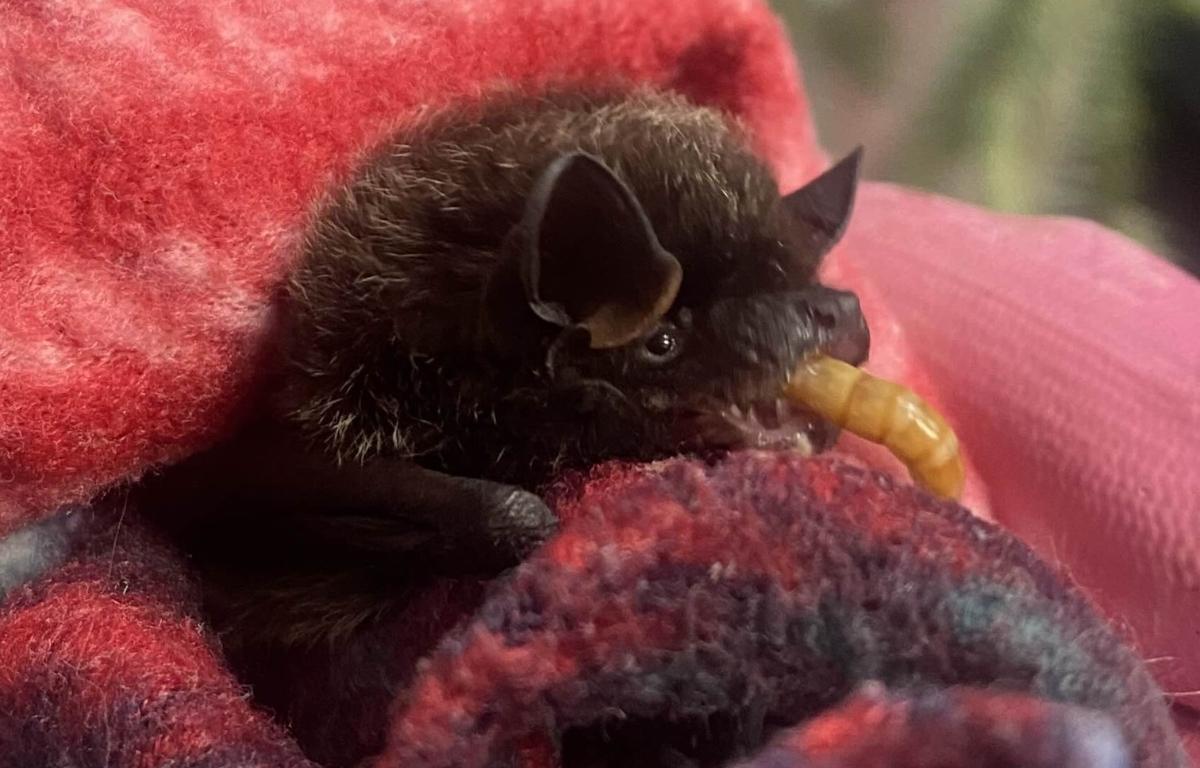

AUGUSTA COUNTY, VA (Rocktown Now) — On February 1, an adult Silver-haired Bat was admitted to the Wildlife Center of Virginia after a homeowner discovered her grounded and exposed on a snow-covered porch in Albemarle County. She is the ninth bat admitted in the past month, highlighting how frequently winter weather can bring these patients into the Center’s care.
On admission, the bat was quiet but alert, weighing only 8 grams. The veterinary team conducted a thorough exam and found that she was mildly dehydrated and thin, though she had no visible injuries, and radiographs did not reveal any internal trauma. The team suspects that the bat had exhausted her fat reserves and struggled to find enough food in the harsh winter conditions.
“Silver-haired bats often migrate to warmer climates, but many remain in Virginia and enter torpor to survive the winter, “explains Lilly Farmer, a veterinary technician at the Center. “They depend heavily on the fat reserves they build up in the fall. If a bat is suddenly disturbed from a roost, or didn’t accumulate enough fat before winter storms, it can burn through those reserves quickly. When that happens, they may be forced to forage on a cold landscape where insects are scarce—which is likely what happened to this patient.”
The initial treatment plan focused on supportive care. Rehabilitation staff began to gradually rehydrate the bat and provided daily hand-feeding of nutrient-dense mealworms. During the first week of February, the bat’s condition steadily improved, and by February 6, she was more active and began “bowl training,” a process designed to encourage independent feeding.
The bat is currently housed in one of the Center’s indoor enclosures, where she continues to receive daily care. Her prognosis remains guarded, but if her recovery continues as planned, staff will begin initial flight training on February 14 to test her stamina and build the strength she needs to return to the wild.
Cases like this one serve as an important reminder that bat encounters are not uncommon during winter. If you find a bat that appears to need help, approach with caution and avoid any direct contact. Contact a licensed wildlife rehabilitator for guidance before attempting to relocate or release the animal. For specific rescue advice or more information, visit the Center’s Bats as Neighbors page or contact the Wildlife Center of Virginia at (540) 942-9453.