


 Listen Live

WAYNESBORO, VA (Rocktown Now) — On November 19, 2025, an adult Bald Eagle was admitted to the Wildlife Center after being found injured in Middlesex County, following a suspected fight with another eagle. Eastern Virginia Wildlife Rescue responded to the scene, safely captured the bird, and transported him to the Center for emergency care.
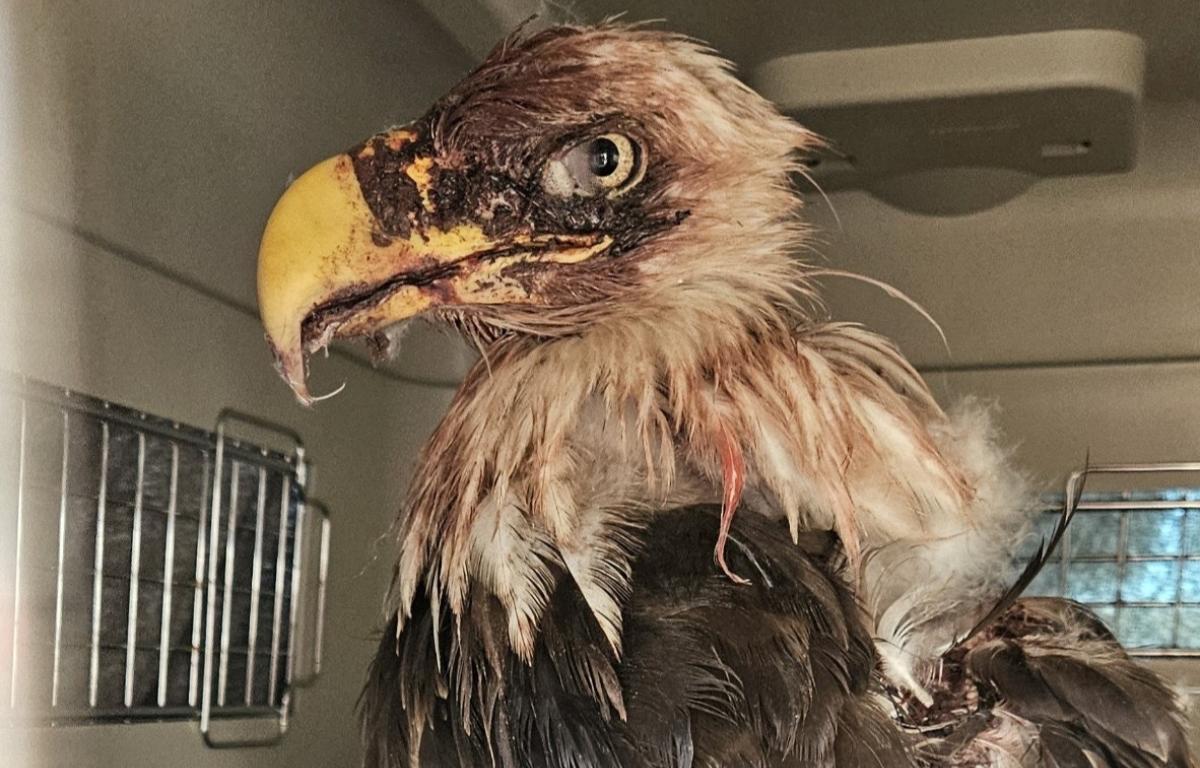
On admission, the eagle was quiet but alert, with significant head trauma. Closer examination revealed multiple puncture wounds to the head and neck—injuries severe enough to require immediate stabilization. “We ended up stapling the worst of the wounds shut before we could even do surgery,” said Dr. Karra, Director of Veterinary Services. In addition to the puncture wounds, the eagle also had swelling along the shoulders and back, as well as subclinical lead toxicosis.
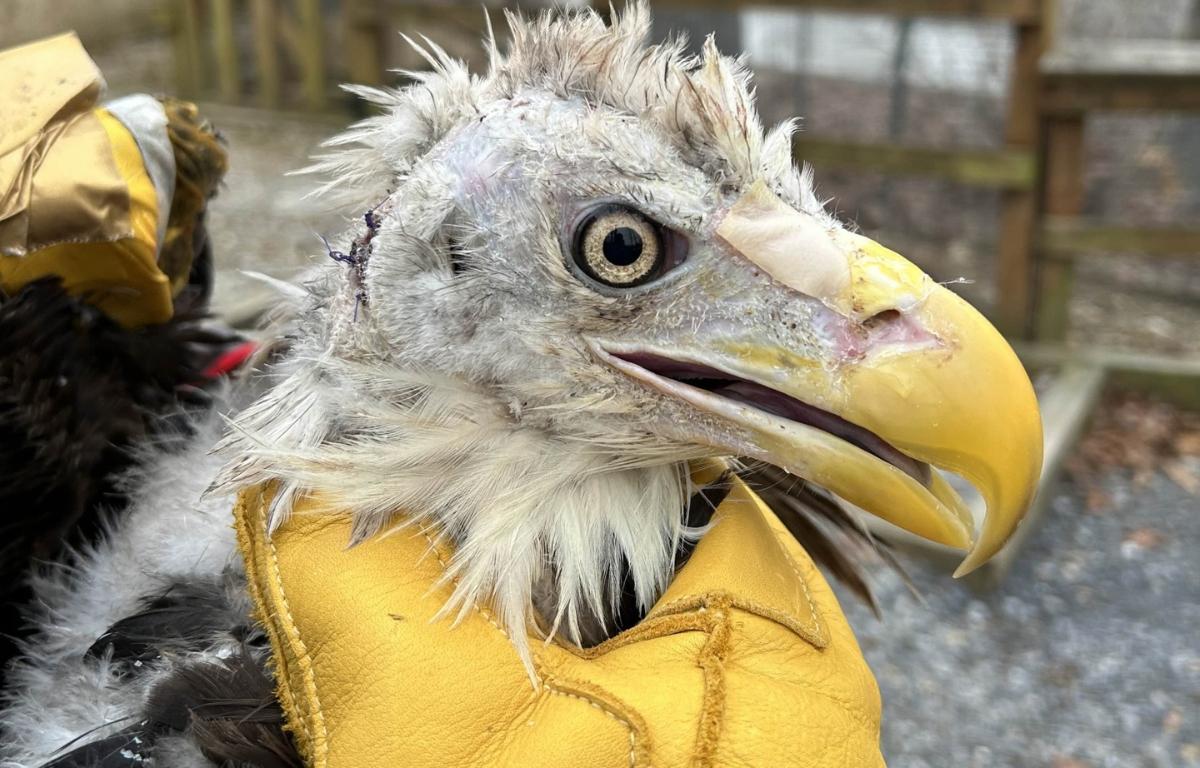
The veterinary team immediately began treating the eagle with pain medication, antibiotics, anti-inflammatories, fluids, and chelation therapy to remove the lead. During the next two months, staff continued to aggressively treat the eagle’s injuries, which required repeated wound cleaning, repair, and surgical removal of damaged tissue. “He’s undergone at least ten procedures since admission so that we could reconstruct the wound,” said Dr. Karra. “It’s been a very slow, deliberate process, but he’s come such a long way.”
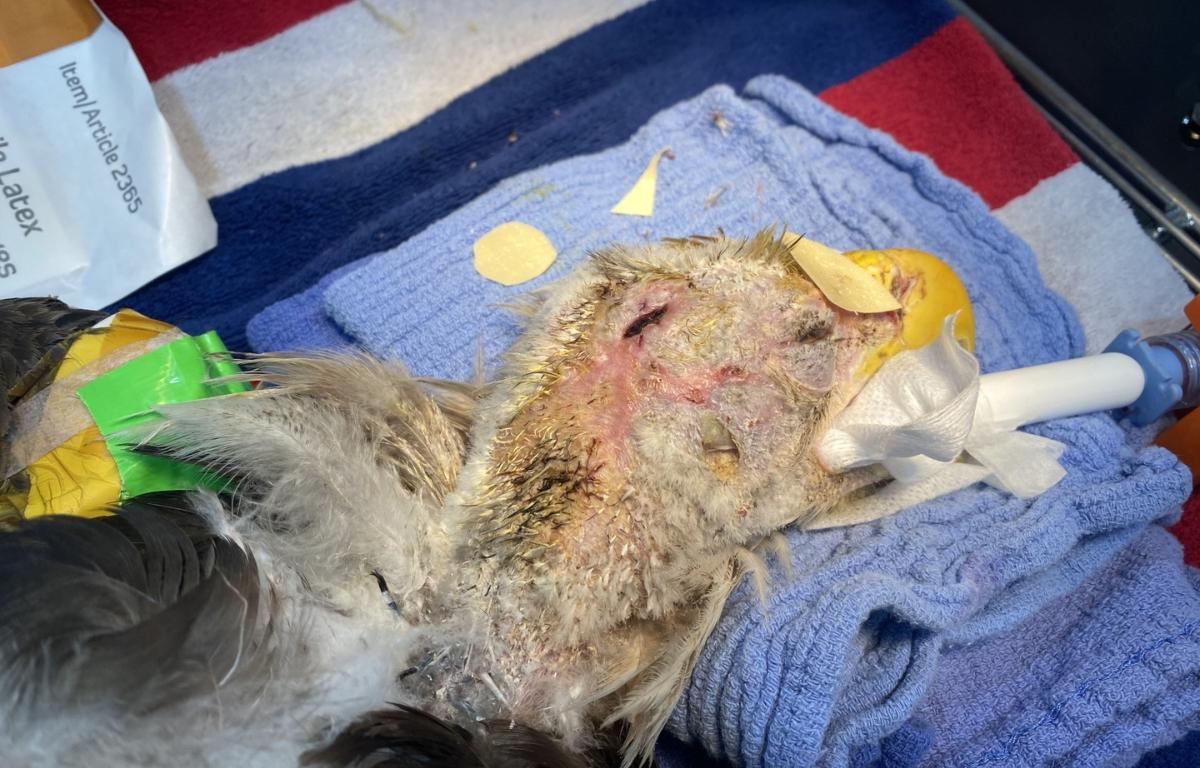
Currently, the eagle is housed in the Center’s hospital, where the team can closely monitor him. The chelation therapy was successful, and follow-up testing confirmed that the lead has been fully removed from his system. The majority of the eagle’s wounds around the beak and top of the head have healed, though one wound on the back of the bird’s head has proven more challenging and is still being actively treated; on January 2, the eagle underwent his most recent procedure to debride dead tissue and suture the wound closed.
For now, the team will continue to closely monitor the eagle, providing ongoing medical care and supportive treatment. Due to the severity of his injuries and the long recovery still ahead, the bird’s prognosis remains guarded.