


 Listen Live
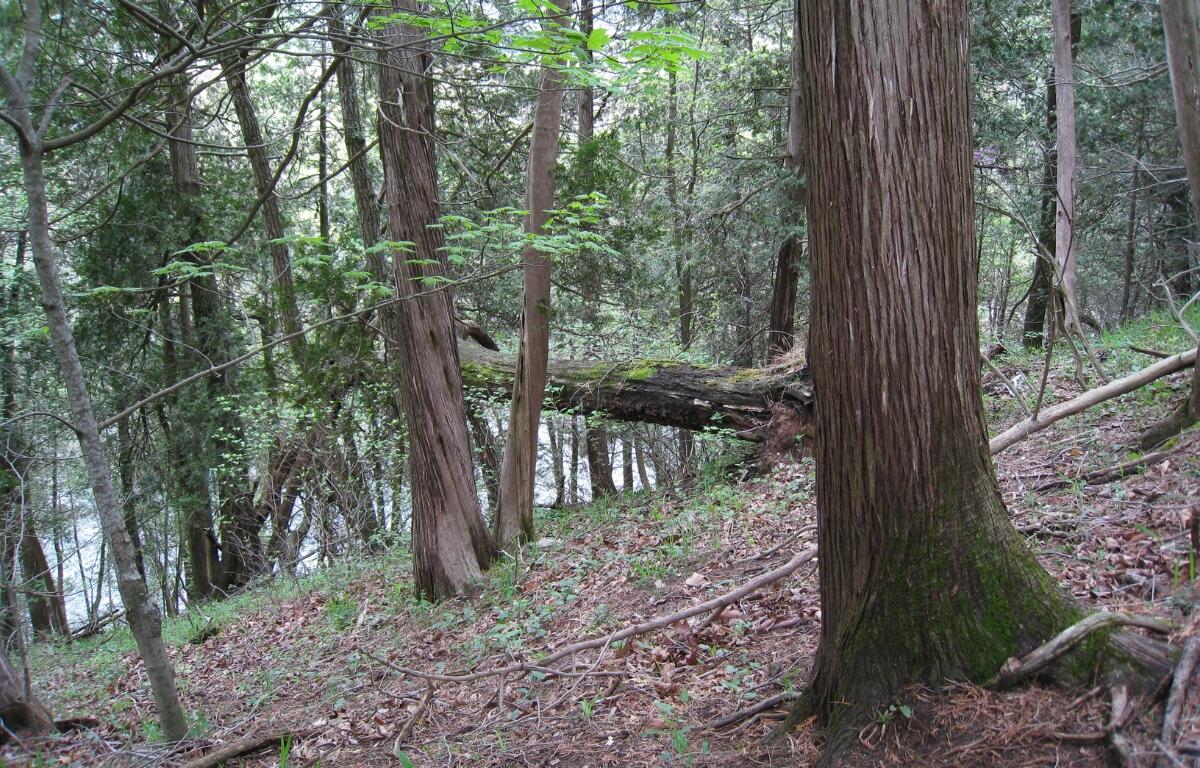

ROCKINGHAM COUNTY, VA (Virginia Department of Conservation and Recreation) — A mature stand of northern white cedar trees along the North Fork of the Shenandoah River, Virginia’s largest remaining example of this globally rare forest, is now protected as part of Brocks Gap Natural Area Preserve.
The state’s 69th natural area preserve is located west of Broadway in Rockingham County. Most of the preserve’s total 214.8 acres is owned by the Virginia Department of Conservation and Recreation; 34.3 acres remains privately owned and is protected by an open space easement and deed of dedication. The preserve is managed by the Virginia Natural Heritage Program, whose mission is to conserve the state’s biodiversity.
“The establishment of Virginia’s newest natural area preserve, Brocks Gap, will safeguard the area’s outstanding ecological integrity and improve water quality for the Shenandoah River watershed and ultimately the Chesapeake Bay,” said DCR Acting Director Andrew Smith. “This is an important investment to ensure that a prime example of Virginia’s natural resources will be protected in perpetuity.”
Sam Showalter, president of the Showalter Family Corporation, the former owner of the property, said the family has been working toward seeing their land protected for more than 15 years. “The Clayton and Thelma Showalter family is indeed grateful to the Virginia Department of Conservation and Recreation and several other conservation groups for helping our Family Corporation preserve forever the cedar trees and other unique aspects of our mountain farm near Brocks Gap,” he said.
The preserve lies on rolling terrain on the eastern slope of Little North Mountain, with the elevation ranging from 1,000 feet at the North Fork of the Shenandoah River to 2,046 feet atop the mountain. The site is along the North Mountain fault; a major geologic boundary defining the edge of the Shenandoah Valley.
“Along with its globally rare northern white-cedar slope forest, wetlands and karst landscape resources, Brocks Gap Natural Area Preserve falls within one of Virginia’s most significant ecological cores and essential conservation sites,” said Lesley Starke, chief of natural areas stewardship for the Virginia Natural Heritage Program. “Our staff is currently developing management plans with the future goal of being able to offer public access for wildlife viewing and nature study.”
Funding sources for the acquisition included a Virginia Land Conservation Foundation grant awarded for fiscal year 2023. Additional funding was provided from the DuPont-Waynesboro Natural Resource Damage Assessment and Restoration settlement.
While the main, continuous native range of northern white cedar (Thuja occidentalis) forests spans the northeastern United States, the Upper Midwest and eastern Canada, it is found in a handful of locations in the Central Appalachians. In Virginia, there are less than 70 acres left of this type of forest, which is threatened by infestations of invasive insects.